
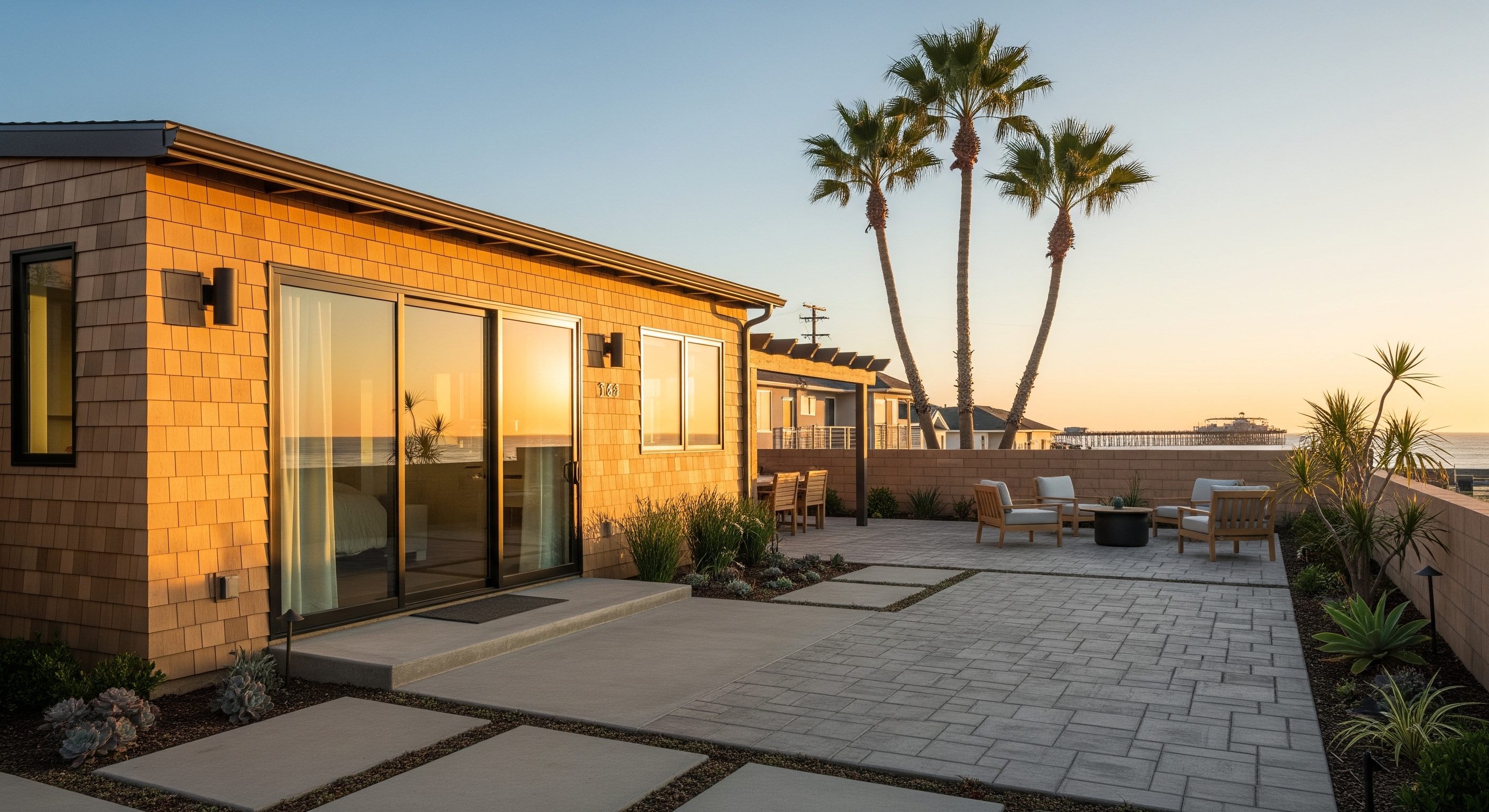
August 24, 2026
Clara Blunk | Orange County Luxury Real Estate
ADUs As A Rental Strategy In Huntington Beach Real Estate
An insider’s real estate guide to building and renting Accessory Dwelling Units (ADUs) in Huntington Beach: evaluating AB 976 owner-occupancy exemptions, build costs, achievable rental rates, and coastal zone permit rules.
Huntington Beach ADU Rental Strategy: 2026 Quick-Take Summary
|
ADU Requirement / Factor |
Huntington Beach & CA State Regulation |
Investor & Homeowner Impact |
|---|---|---|
|
Owner Occupancy Rule |
Exempt under CA AB 976 (permanent ban on owner occupancy) |
Rent both primary home and ADU without living on-site |
|
Permit Review Timeline |
60-day ministerial clock under CA SB 13 |
Streamlined city plan check without public hearings |
|
Achievable Monthly Rent |
$2,200 – $3,000 / month for 1-bedroom ADUs |
Strong long-term gross rental yields (13% – 18% gross on build cost) |
|
Coastal Zone Permits |
Local Coastal Program review & CA Coastal Commission guidance |
Additional setback and environmental review for coastal parcels |
Building an ADU in Huntington Beach, CA offers strong rental yields with 1-bedroom units renting between $2,200 and $3,000 per month. Under California AB 976, owner-occupancy is not required. Standard ADUs up to 1,200 square feet require 60-day ministerial permit processing, though coastal zone parcels require additional coastal commission review.
Should You Add An ADU In Huntington Beach Real Estate?
Clara Blunk provides property-specific feasibility analysis to help Orange County homeowners evaluate zoning limits, coastal permit requirements, and realistic rental comps.
Huntington Beach ADU Requirements And Rental Benchmarks
Examine zoning rules, construction costs, achievable rental rates, and tax considerations for ADUs in Huntington Beach:
|
ADU Parameter |
State Mandate & Huntington Beach Local Code |
Financial & Practical Value |
|---|---|---|
|
Owner Occupancy |
Permanently prohibited under AB 976 for long-term rentals |
Full investment flexibility to lease main home and ADU simultaneously |
|
JADU Max Size |
Up to 500 sq ft within existing primary home structure |
Lower build cost; ideal for converting attached garage or spare bedroom |
|
Detached ADU Max Size |
Up to 1,200 sq ft (state baseline standard) |
Allows spacious 2-bedroom rental layouts maximizing monthly cash flow |
|
Setback Requirements |
4-foot side and rear yard setbacks for new detached structures |
Preserves backyard space while meeting municipal building codes |
|
Build Cost Range |
$150,000 – $400,000+ for detached; garage conversions start in low six-figures |
Build costs run $200 – $450+ per sq ft depending on site utility work |
|
Impact Fee Exemptions |
Units under 750 sq ft exempt from city impact fees under SB 13 |
Saves $5,000 – $15,000 in upfront municipal permit fees |
|
Property Tax Assessment |
Supplemental assessment on new ADU construction value only |
Main home Prop 13 tax base year remains protected and unchanged |
|
Short-Term Rentals (STR) |
Prohibited for most ADUs under Huntington Beach STR ordinance |
Long-term residential leases (30+ days) remain the standard compliant strategy |
Note: ADU regulations and rental benchmarks align with California HCD guidelines, Orange County Assessor practices, and City of Huntington Beach Municipal Code.
Key ADU Strategy Features That Boost Rental Income
Garage Conversion ADUs In Huntington Beach
- Typical Build Cost: Low six-figures ($100,000 – $180,000).
- Size Range: 350 – 500 sq ft (Studio or 1-Bedroom).
- Rental Estimate: $2,000 – $2,500 / month.
- Key Advantage: Utilizes existing footprint; shorter construction timeline.
Detached Custom ADUs In Huntington Beach
- Typical Build Cost: $200,000 – $400,000+.
- Size Range: 600 – 1,200 sq ft (1 or 2-Bedrooms).
- Rental Estimate: $2,500 – $3,500 / month.
- Key Advantage: Maximum privacy for tenants; higher long-term property appraisal.
Adding an Accessory Dwelling Unit (ADU) or Junior ADU (JADU) to a Huntington Beach residential property has become one of Orange County’s most compelling real estate investment strategies. Driven by strong coastal tenant demand, high market rents, and pro-housing California legislation, homeowners and real estate investors are leveraging ADUs to generate steady passive income and expand property equity.
ADU Zoning Laws And Permit Timelines In Huntington Beach
California state law provides a favorable regulatory framework for ADU construction, preempting restrictive local municipal ordinances. In Huntington Beach, single-family and qualifying multi-family parcels are eligible for ADU additions.
- 60-Day Ministerial Approval Clock: Under SB 13, local planning departments must approve or deny complete ADU permit applications within 60 days without discretionary public hearings.
- Impact Fee Waivers: ADUs under 750 square feet are completely exempt from municipal impact fees, significantly reducing upfront predevelopment expenses.
- Parking Exemption Rules: ADUs located within one-half mile of public transit or created within existing structures do not require replacement off-street parking.
How AB 976 Changes ADU Owner Occupancy And Rentals
California Assembly Bill 976 permanently prohibits local cities from enforcing owner-occupancy requirements on ADUs. Homeowners can build an ADU, rent it out to long-term tenants, and later move off-site while leasing both the primary residence and the ADU to maximize portfolio cash flow.
Comparing ADU Build Costs And Rental Rates In Huntington Beach
Financial returns depend on build type, square footage, and proximity to the ocean:
- Garage Conversion Costs: Transforming an existing attached or detached 2-car garage into a studio or 1-bedroom ADU typically costs $100,000 to $180,000.
- Detached Ground-Up Build Costs: New standalone ADUs range from $200,000 to $400,000+, or roughly $250 to $450 per square foot depending on finish selections and site trenching.
- Achievable Huntington Beach Rents: 1-bedroom ADUs in Huntington Beach generally rent for $2,200 to $3,000 per month, yielding gross returns on construction cost of 13% to 18%.
Coastal Zone Rules And SB 1077 For Huntington Beach ADUs
Properties located within Huntington Beach’s designated Coastal Zone face additional review under the city’s Local Coastal Program (LCP). Under California SB 1077, the California Coastal Commission is establishing updated guidance to balance ADU expansion with coastal resource protection. Coastal parcels may require specialized geotechnical studies, elevation checks, and coastal development permits.
What AB 1482 Tenant Protections Mean For ADU Rentals
Long-term ADU rentals are subject to California’s Tenant Protection Act (AB 1482) unless specific statutory exemptions apply. AB 1482 caps annual rent increases at 5% plus local CPI (maximum 10% total) and enforces just-cause eviction standards.
For investors considering short-term vacation rentals (Airbnbs), Huntington Beach strictly regulates STRs. Most newly built ADUs are explicitly prohibited from operating as short-term rentals under municipal code, making long-term residential leasing (30+ days) the primary compliant strategy.
How ADUs Affect Property Taxes And Prop 13 Assessments
Constructing an ADU triggers a supplemental property tax assessment from the Orange County Assessor based strictly on the new construction’s market value. Your original Proposition 13 base year value for the primary residence remains protected and unchanged, resulting in a manageable tax increase proportional to the added improvement.
Orange County Investment Real Estate Agent Clara Blunk
Clara Blunk is an award-winning Orange County Realtor specializing in coastal investment properties, multi-family assets, and ADU feasibility across Huntington Beach, Newport Beach, Costa Mesa, and Laguna Beach. Clara provides data-driven advisory to help homeowners analyze zoning parameters, estimate realistic construction budgets, and evaluate long-term rental cash flow.
Contact Clara Blunk | Orange County Luxury Real Estate
Hidden Insights Online Portals Miss On Huntington Beach ADUs
Automated real estate search portals like Zillow and Redfin evaluate property values using flat square-footage averages, completely missing the cash-flow multiplier of an ADU. Search algorithms fail to factor in coastal zone boundary lines, municipal STR restrictions, or AB 1482 rent cap implications. Working with a dedicated local expert like Clara Blunk ensures you evaluate ADU feasibility with complete financial transparency.
Orange County Coastal Living And Real Estate Guides
Discover adjacent local guides, neighborhood breakdowns, and coastal property insights:
Schedule Your Huntington Beach ADU Feasibility Consultation
Whether you are planning to build an ADU on your existing Huntington Beach lot or searching for ADU-ready properties in Orange County, partner with Clara Blunk for expert advisory.
Frequently Asked Questions About Huntington Beach ADUs
Renting An ADU In Huntington Beach Without Living There
Yes. Under California AB 976, cities cannot require owner-occupancy on properties with long-term ADU rentals, allowing owners to rent both the primary home and ADU simultaneously.
Cost To Build A Detached ADU In Huntington Beach
Detached ADUs in Huntington Beach generally cost between $200,000 and $400,000+ depending on square footage, finish selections, site conditions, and utility connections.
Typical Rent For One Bedroom ADUs In Huntington Beach
1-bedroom ADUs in Huntington Beach typically rent for $2,200 to $3,000 per month depending on location, proximity to the beach, and interior quality.
Using A Huntington Beach ADU As A Short Term Rental
Generally no. Huntington Beach restricts short-term vacation rentals, and most newly constructed ADUs are explicitly barred from STR use under city ordinance.
How ADUs Change Property Taxes In Orange County
Adding an ADU triggers a supplemental tax assessment based only on the value of the new construction. The Prop 13 base year tax assessment for your primary home remains unchanged.
Source: Compiled from California Department of Housing and Community Development (HCD) ADU handbook, City of Huntington Beach Municipal Code, Orange County Assessor property assessment rules, and California Coastal Commission guidelines.
Recent Orange County Real Estate Blog Posts
Dana Point Harbor Sets First Official Closing Date
The Frida Cinema Doesn’t Just Show Movies. It Runs Half of Downtown Santa Ana’s Calendar.
ADUs As A Rental Strategy In Huntington Beach Real Estate
HOA Fees In Newport Beach Condos For Homebuyers
Costa Mesa’s Summer Already Peaked. Here’s What’s Actually Left in August.
Home Inspection Guide Before Buying In Laguna Beach
Home Inspection Steps Every Laguna Beach, CA Buyer Should Take.
Top Remodeling Tips For Laguna Beach CA Homes
What To Know Before Remodeling A Home In Laguna Beach, CA.

Why Invest In Laguna Beach CA Real Estate Market
Reasons Buyers Choose To Invest In Laguna Beach, CA.

Timeless Design Tips For Laguna Beach CA Homes
Laguna Beach, CA Design Choices That Never Go Out Of Style.
Get Personalized Huntington Beach ADU Guidance
Connect with Clara Blunk and unlock a world of real estate opportunities in Laguna Beach. Whether you’re buying, selling, or just exploring options, Clara provides the expertise and support you need for a successful real estate experience.